Cities have stories: Young people write the next chapter
Behind a façade, a forgotten story may be waiting. A former club can preserve the memory of newfound freedom. A street we walk every day can reveal who was visible in a city—and whose voice was left unheard.
These are the questions opened up by ten model heritage tours created within EYES – Empower Youth, Explore Stories. Across five European cities, they invite us to look more closely at familiar places.
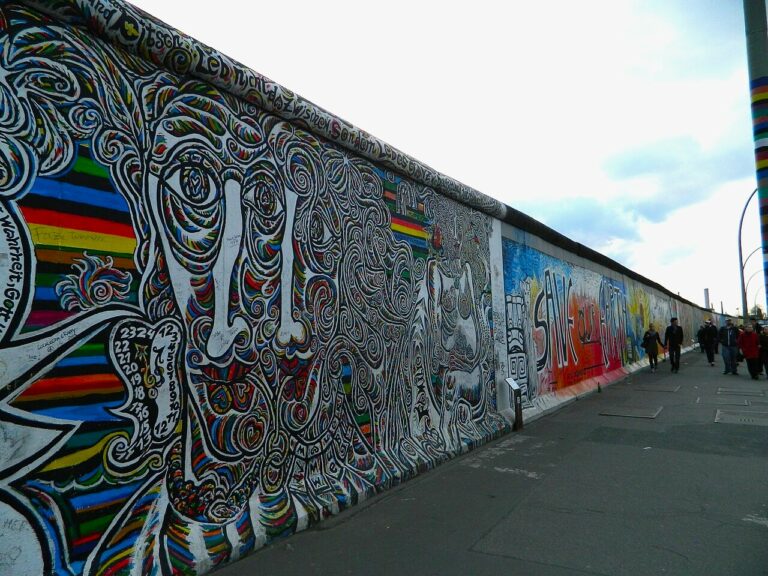
East Side Gallery, featured in Beats of Berlin.
Photo: By Freepenguin – Own work, CC BY-SA 3.0, https://commons.wikimedia.org/wiki/Special:Redirect/page/25752655
Ten tours through freedom memory and belonging
In Berlin, Beats of Berlin traces techno culture and the spaces where music brought people together after the fall of the Wall. From Cars to Community explores green spaces in Kreuzberg and asks: who does the city belong to, and who decides how we use it?
In Mons, The Ideal City? examines the ideas that shaped the city and their limits. Women in Mons: Past and Present turns attention to women’s contributions and their visibility in public space. Whose stories do we remember when we talk about a city’s history?
Warsaw reveals a less comfortable side. Beneath the Surface explores disease, waste, fear and control in the Old Town, while PRL Universe connects everyday absurdities with symbols of power during the Polish People’s Republic.
In Budapest, On Stage leads through the theatre and entertainment district. Walking through History opens up questions of Jewish life, the Holocaust and civic memory.
Two Novi Sad tours show how many stories the same place can hold. Cultural Echoes of Novi Sad explores everyday encounters, public spaces and belonging, while Dark Shadows of Novi Sad turns to the city’s difficult past.
Each route leaves a question that lasts beyond the final stop.
From a question to a tour
Now it is young people’s turn to ask their own questions.
To help them turn research into a tour, the EYES partners have created 18 tutorials, available as 20 PDF guides, alongside video tutorials for selected topics. They follow the process from choosing a theme and audience through research and storytelling to route planning, multimedia production and final checks.
A conversation with a former resident can become an audio story, an archive photograph a clue to investigate, and local history a challenge in which visitors take an active part.
Twenty tools to give the story its form
How can that idea be shared? The project’s Toolbox brings together 20 tools to support tour creation, while partner-developed tutorials explain how to use programs such as Trello, Canva, Genially, H5P, Audacity, Ocenaudio, Photopea, CapCut and Shotcut.
Young people can organise research, design visual materials, build interactive tasks and edit audio and video. The choice depends on the story: at one stop, a person’s voice may say the most; at another, a detail in an old photograph.
Ten model tours already exist. The next step is for young people to create tours from their own perspectives—their questions, discoveries and relationships with their communities.
Live near one of the project partners? Contact your local EYES partner to find out how you can get involved, including opportunities to help test the young people’s tours in the coming months. Follow EYES for the next stories and updates. Find the tours, tutorials and other resources on the project website.