Facing the Past: How Young People Are Rethinking Difficult Heritage
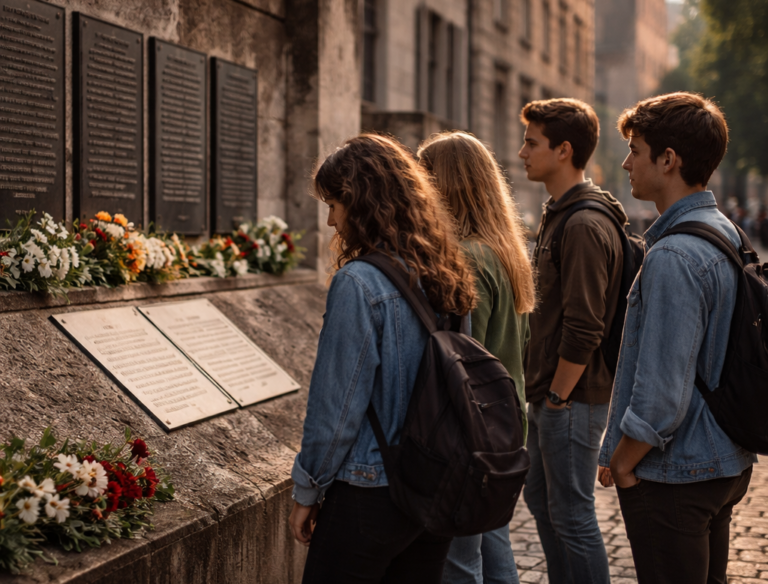
As we walk through the streets of our cities, passing well-known tourist attractions or ordinary buildings, we often don’t realize the kind of dark history they hold. Even when we do know something about it, we rarely stop to reflect on it.
Such places can teach us how our ancestors suffered and endured hardship, how certain historical periods and events were marked by cruelty. They also reveal how society once treated individuals, specific groups or entire communities with harshness and injustice. Today, these places can take on a new meaning, they can become symbols of empathy and togetherness, reminding us not to repeat the mistakes of the past.
This becomes even more powerful when we remember that these people were not just numbers. They lived in these same cities, fell in love in the same places, cared for their families and had their own dreams, desires and ambitions. They lived their “small” lives, just decades or centuries before us. This is precisely why young people are drawn to the human side of history – to stories that feel personal and allow us to see historical figures from a more intimate perspective.
Young people are curious about what their city once looked like, which historical figures it hosted and which important local and global events it was part of. They are also interested in the untold stories behind well-known landmarks – the struggles and realities that shaped them. At the same time, they are especially drawn to legends, myths and mysteries, particularly those connected to places that have not been fully explored. Some secrets may never be uncovered, leaving space for imagination and interpretation. This kind of history is not found in textbooks, it lives in family stories, bedtime tales and conversations among friends. For some of these claims, there is no evidence – but there is also no proof that they are not true
It is true that speaking about the darker side of history is not always easy. However, it is necessary to acknowledge it and to challenge the stigma surrounding it. These stories matter because they teach us something. They must be approached with respect for those who lived them and for their descendants, handled with care, sensitivity and a strong sense of ethics.
This text is part of the EYES project, in which young people explore their cultural heritage.
Curious about the project? Have a look at our other articles or even join us!