Bridging Generations: The Power of Oral History in EYES project
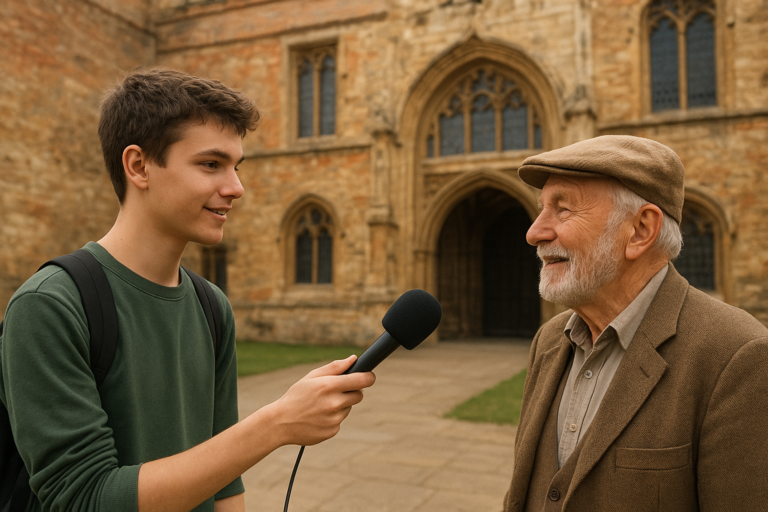
In today’s fast-moving world, it’s easy for generations to drift apart. The EYES project brings them back together through stories. As part of their Youth Heritage Investigations, young participants across five European countries are exploring their local heritage using three complementary research methods: oral history, archival research, and field visits. Among these, oral history stands out for its power to connect people.
By interviewing community elders, young people collect memories, traditions, and life lessons that don’t appear in textbooks. These aren’t just interviews, they are conversations across generations. A story about a local celebration, a difficult winter, or a family tradition turns abstract history into something personal and relatable. Listening to these voices of experience helps young participants understand where they come from, and how their communities have changed.
Oral history (the practice of recording people’s firsthand memories) offers a unique meeting point for young and old. Educators have found that oral history empowers young people to learn through authentic relationships with elders – something no classroom can fully replicate. By “taking the time to listen,” young people absorb knowledge and wisdom in a direct, meaningful way.
These experiences also challenge stereotypes. Young people often walk away with a new appreciation for older generations, while elders feel valued and heard. In many cases, these exchanges create lasting connections. They also remind us that cultural heritage isn’t only found in buildings or archives, but it lives in people’s voices, memories, and emotions.
As the EYES project continues, one thing is clear: heritage is not static. It is a living dialogue between generations. By encouraging young people to explore and share oral histories, we’re not only preserving the past – we are strengthening communities and shaping a more connected future.
Follow the stories and updates at explorestories.eu and see how youth across Europe are bringing heritage to life.
References
- UNESCO: Oral traditions and expressions including language as a vehicle of the intangible cultural heritage
https://ich.unesco.org/en/oral-traditions-and-expressions-00053
- Incite Institute at Columbia University: Oral History Education: Facilitating Intergenerational Learning
- European Commission: European Framework for Action on Cultural Heritage (2019)
https://op.europa.eu/s/AaIJ